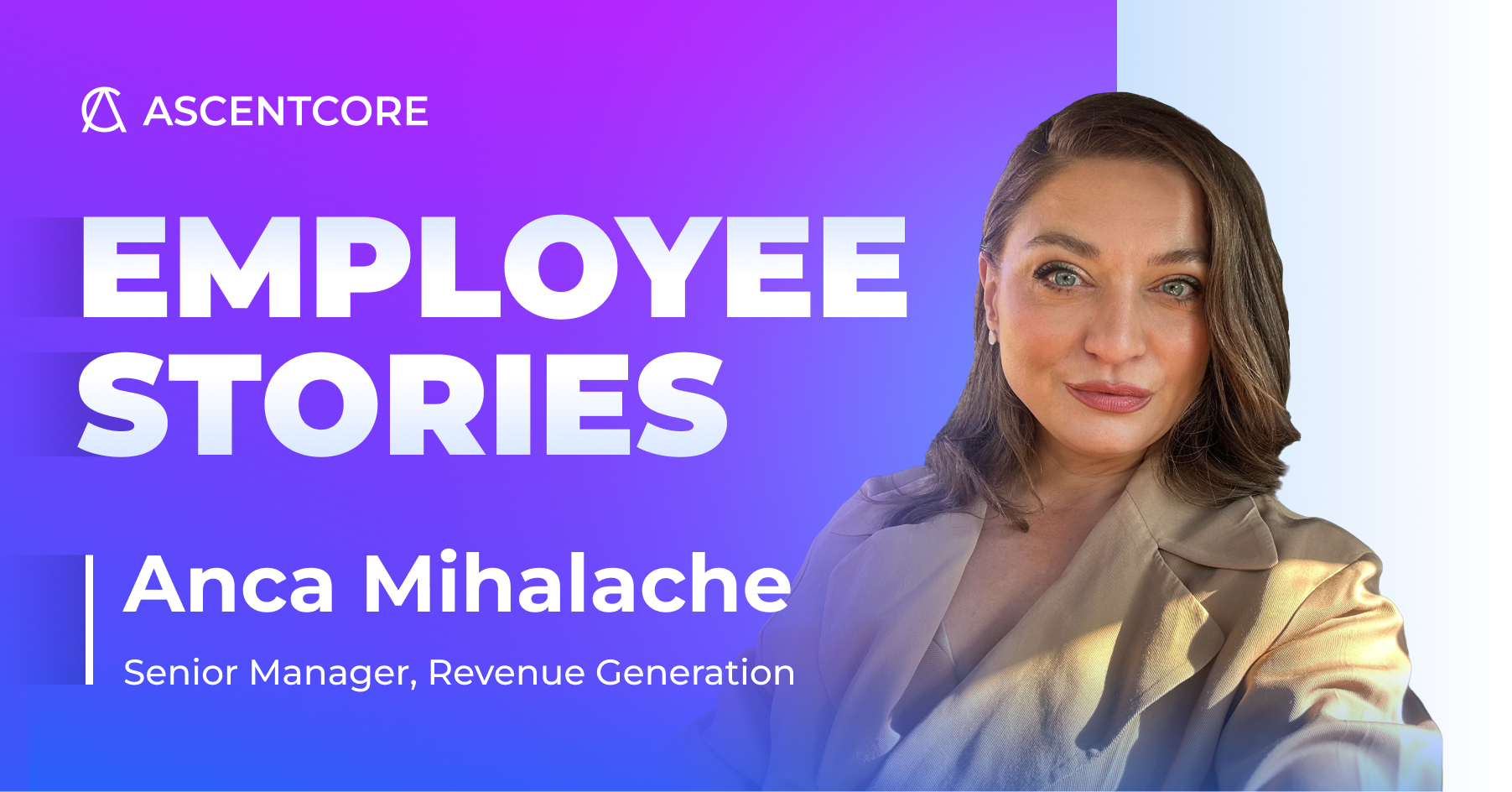
Meet Anca Mihalache, a person who believes real impact lives where purpose meets meaningfulness. With a sharp eye for details and a healthy skepticism,

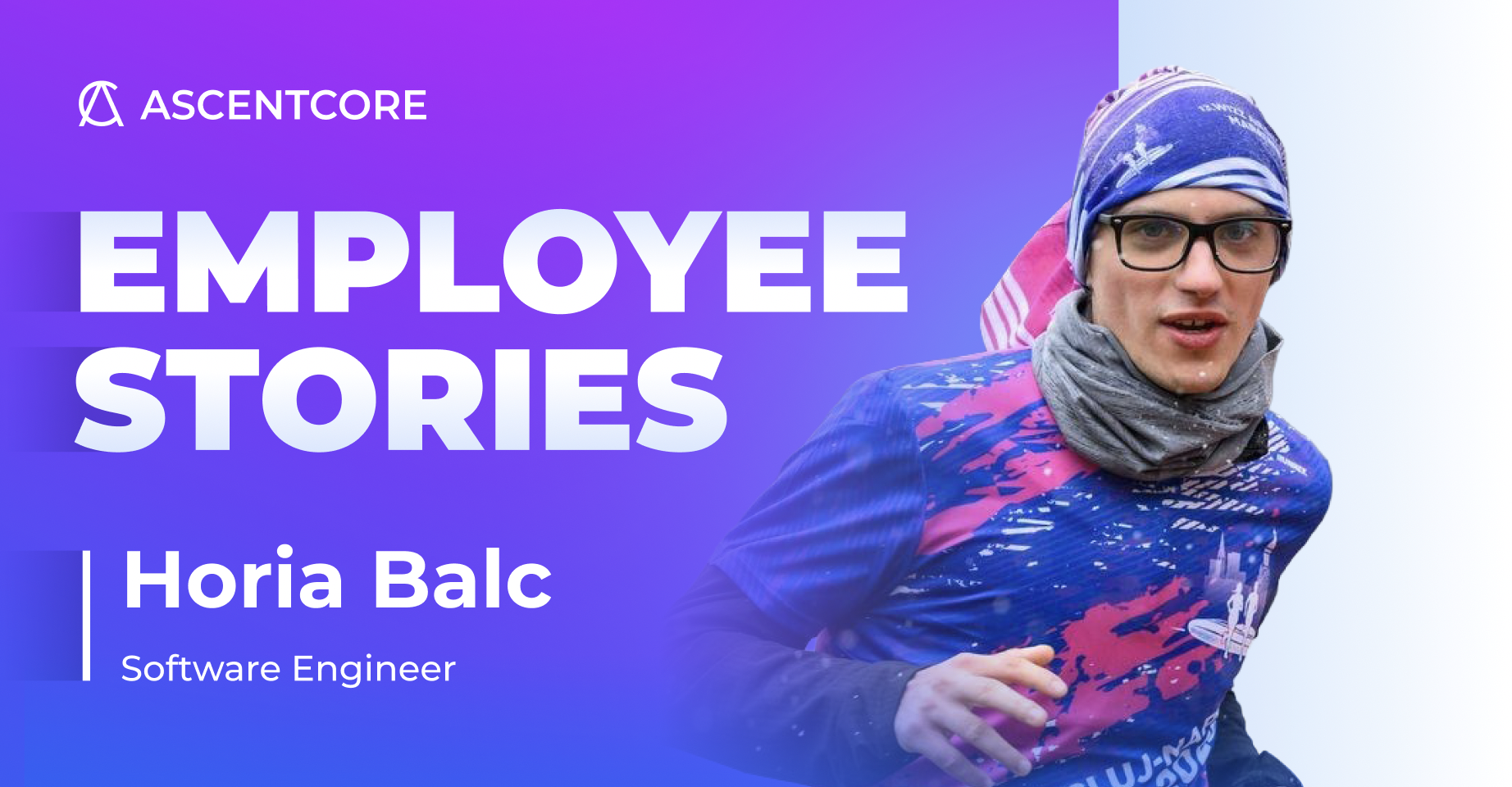
Discover the story of Horia Balc, a Software Engineer who brings the same determination to code as he does to the starting line of a
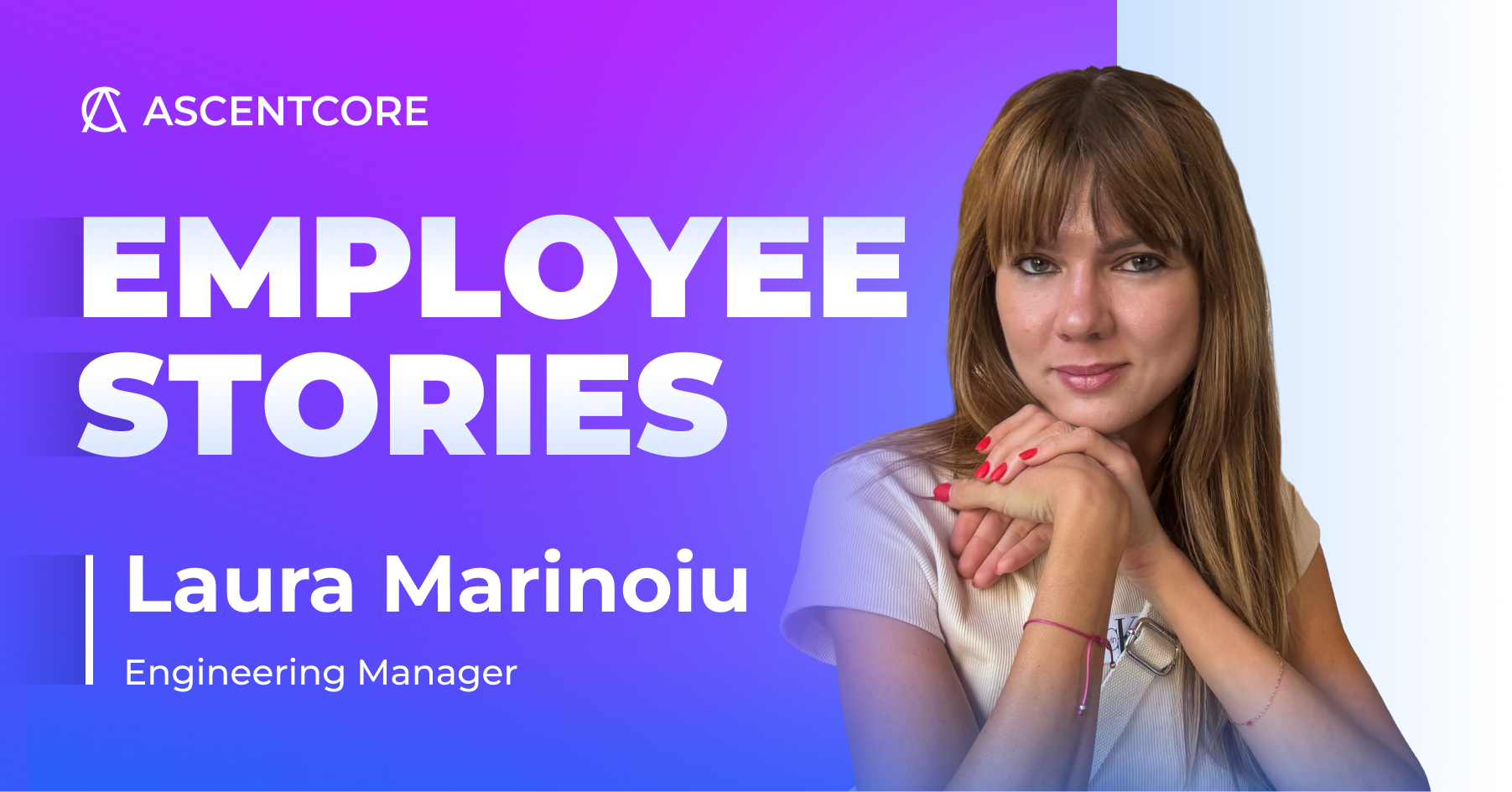
Discover the story of Laura Marinoiu, an Engineering Manager who sees leadership as an ongoing journey shaped by curiosity, trust, and strong teams. Guided by
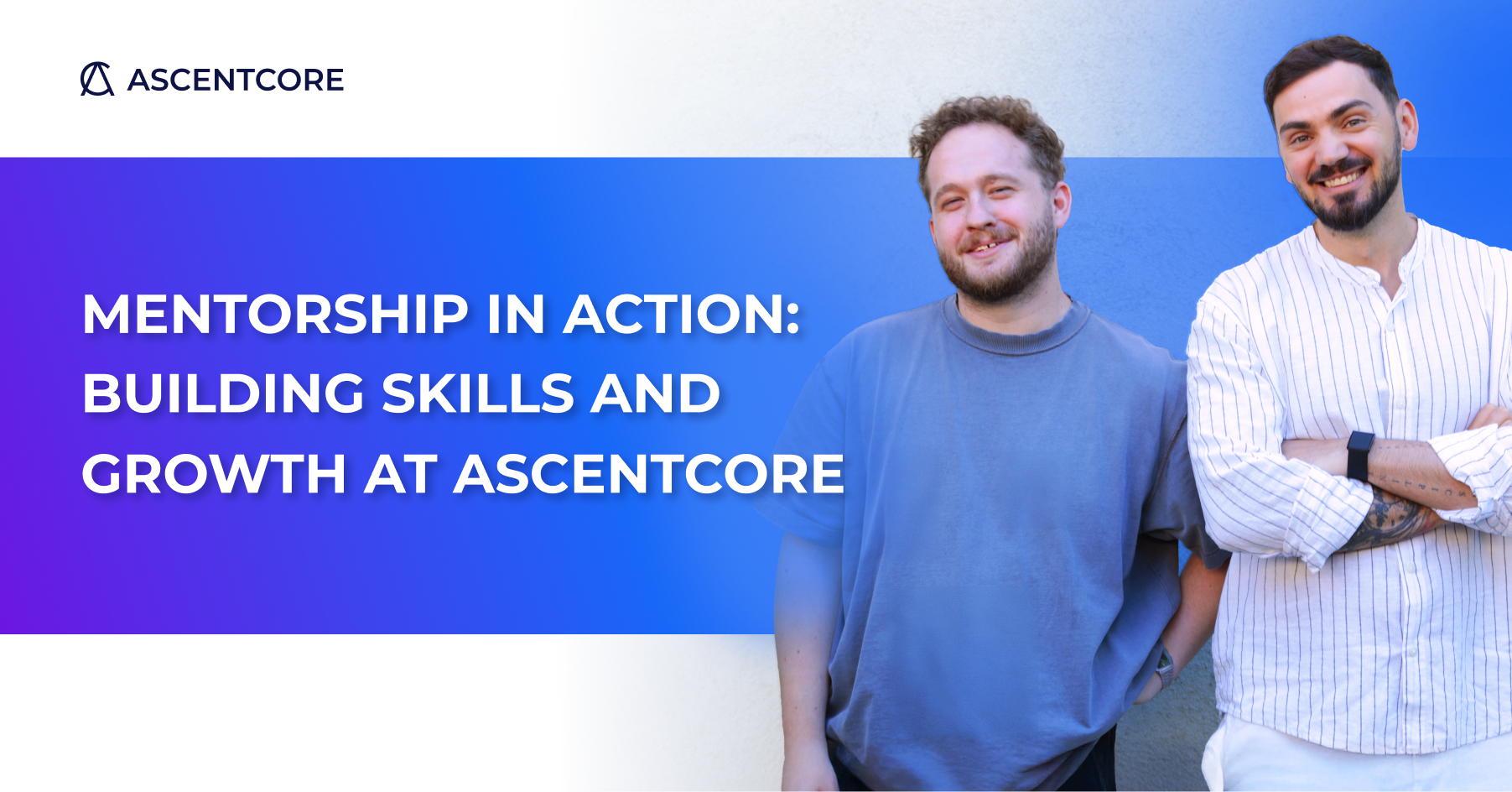
At AscentCore, our mentoring program creates space for employees to learn from one another, share perspectives, and improve the way they work. These relationships build
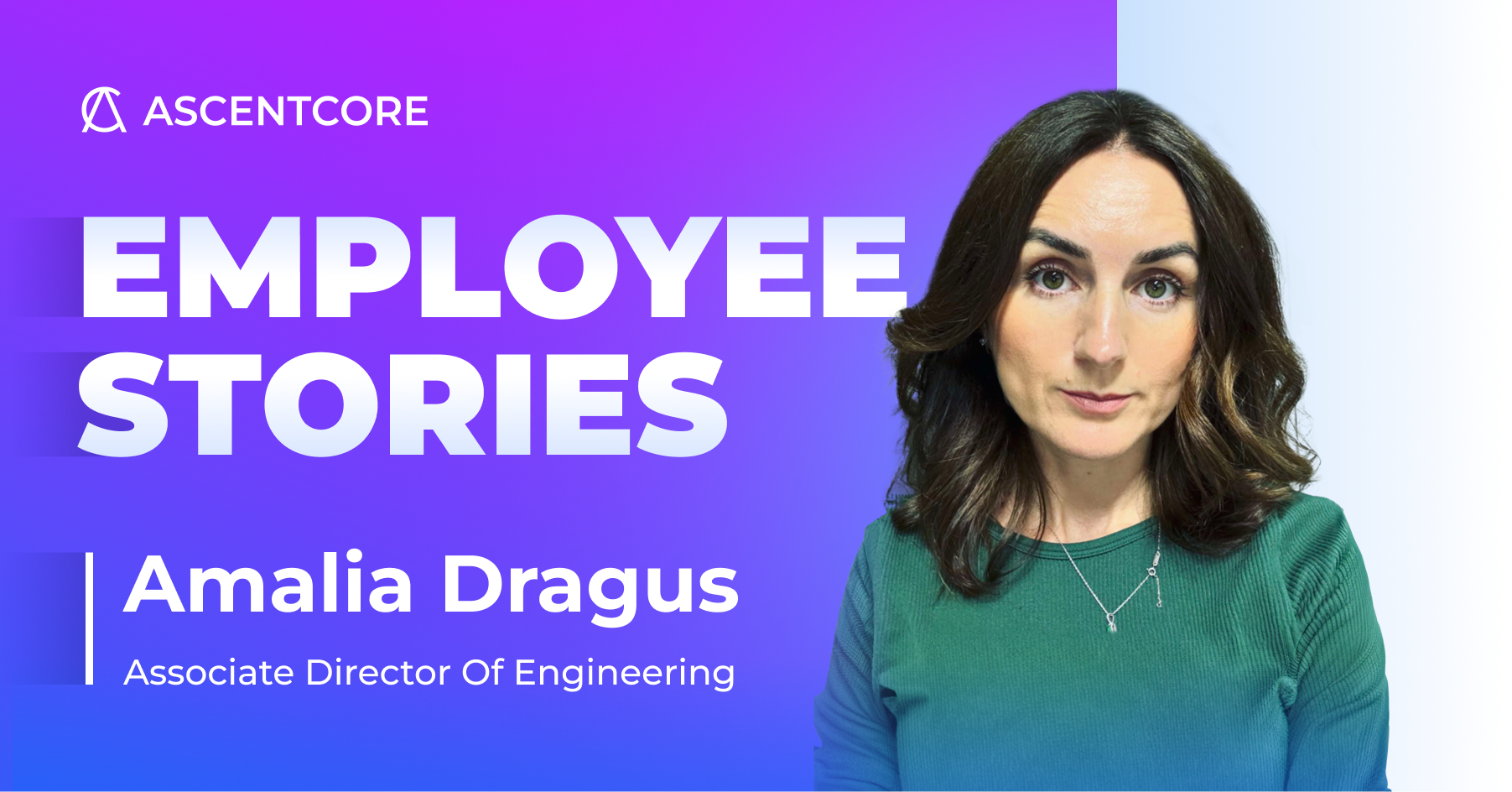
Amalia Drăguș: A Journey of Leadership and Growth from Engineer to Associate Director in Engineering
Discover the inspiring journey of Amalia Drăguș, one of our leaders who balances professional life with personal growth. From leading distributed teams to embracing creativity
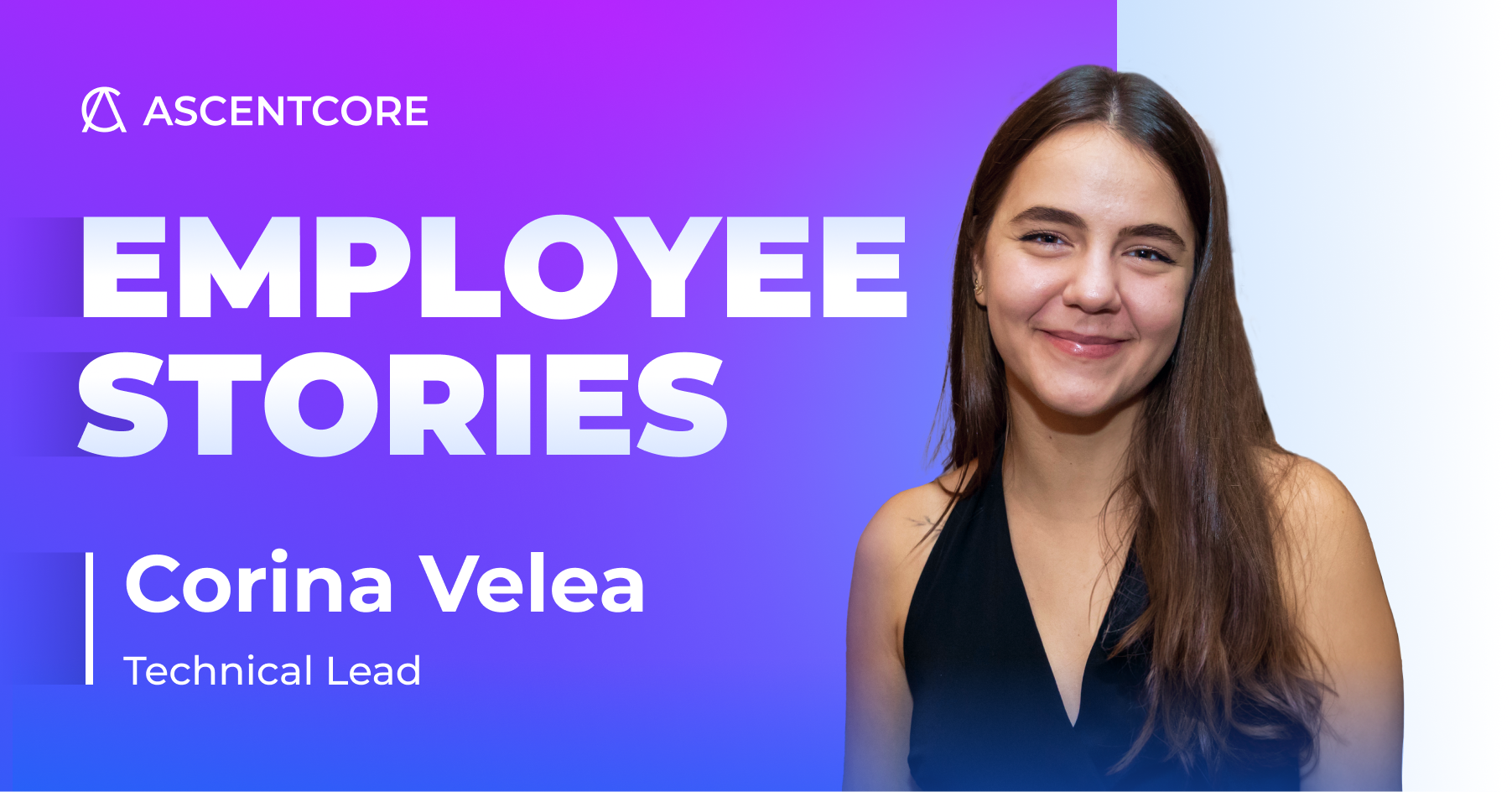
In this edition of our Employee Stories, we reconnect with Corina Velea, one of AscentCore’s talented Technical Leads. Corina’s journey reflects an inspiring evolution from
A couple of years ago, I wrote an article about leadership and opened it by admitting that nobody needs another one about leadership. I am
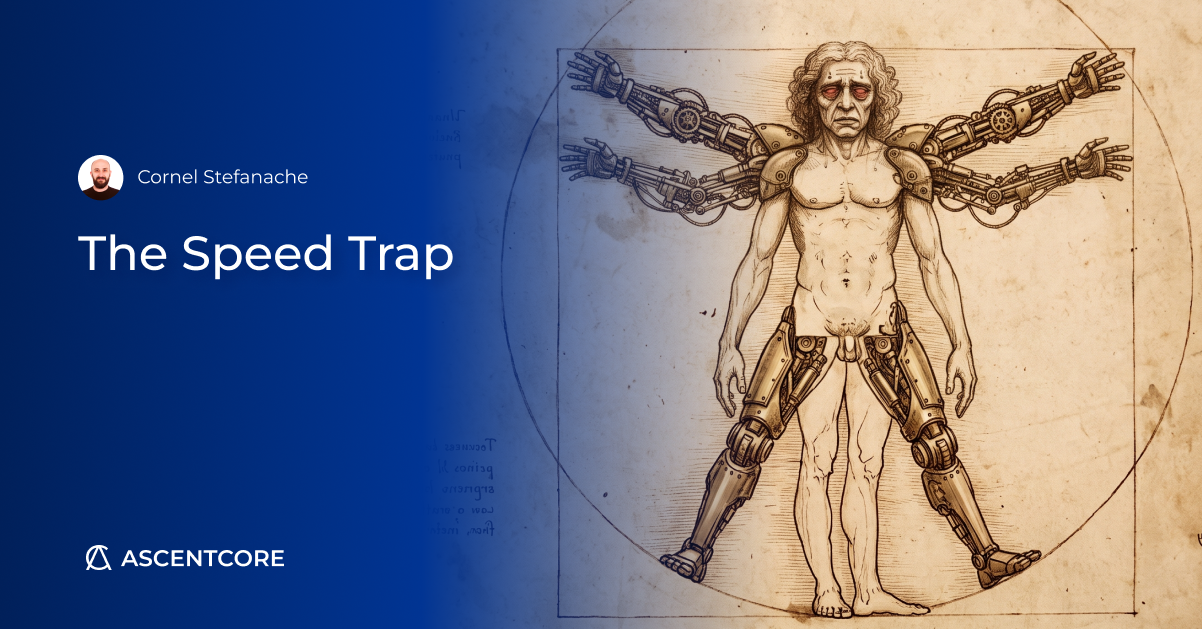
“The machine made writing code almost free, and in doing so it made everything that is not writing code the entire job.” The Afternoon That

“The agent built exactly what was specified, which is how everyone found out that nobody had specified the right thing” The Perfect Application Nobody Could

Would you like to see all of your AI initiatives, their workflows, and their tools under one fully auditable and traceable view? Every AI initiative
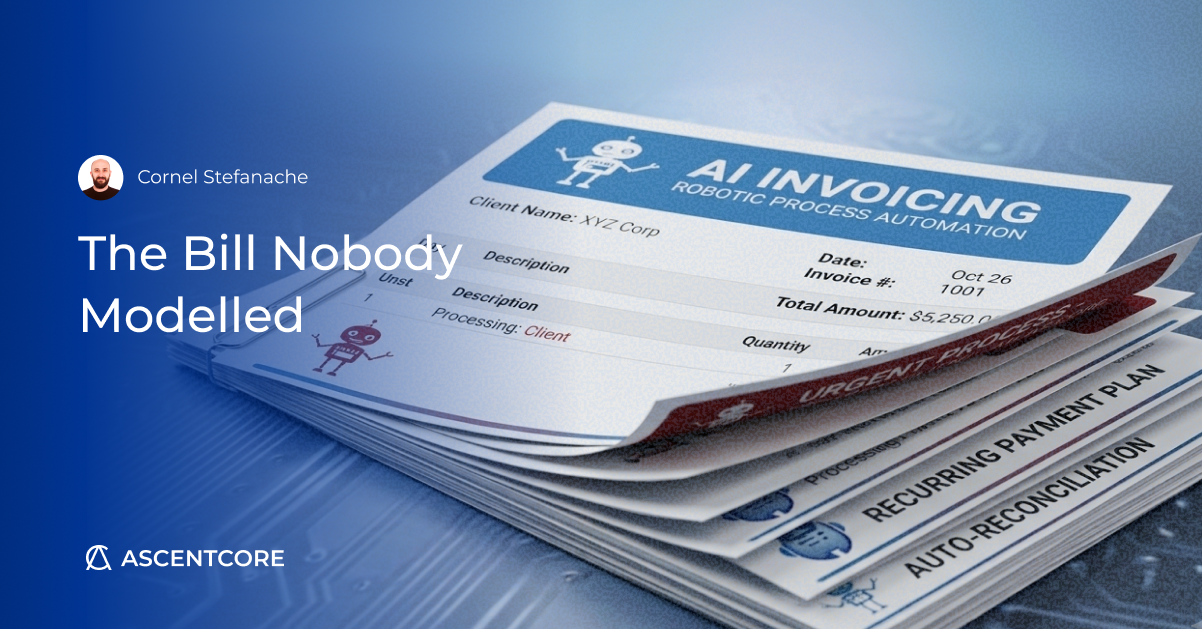
“The future of enterprise AI will not belong to the smartest agents running the most expensive loops, but to the systems disciplined enough to know

“A word that names everything from a chatbot reply to a swarm of self-directing systems has stopped naming anything at all, and the cost
A couple of years ago, I wrote an article about leadership and opened it by admitting that nobody needs another one about leadership. I am
“The machine made writing code almost free, and in doing so it made everything that is not writing code the entire job.” The Afternoon That
“The agent built exactly what was specified, which is how everyone found out that nobody had specified the right thing” The Perfect Application Nobody Could
Would you like to see all of your AI initiatives, their workflows, and their tools under one fully auditable and traceable view? Every AI initiative
“The future of enterprise AI will not belong to the smartest agents running the most expensive loops, but to the systems disciplined enough to know
“A word that names everything from a chatbot reply to a swarm of self-directing systems has stopped naming anything at all, and the cost